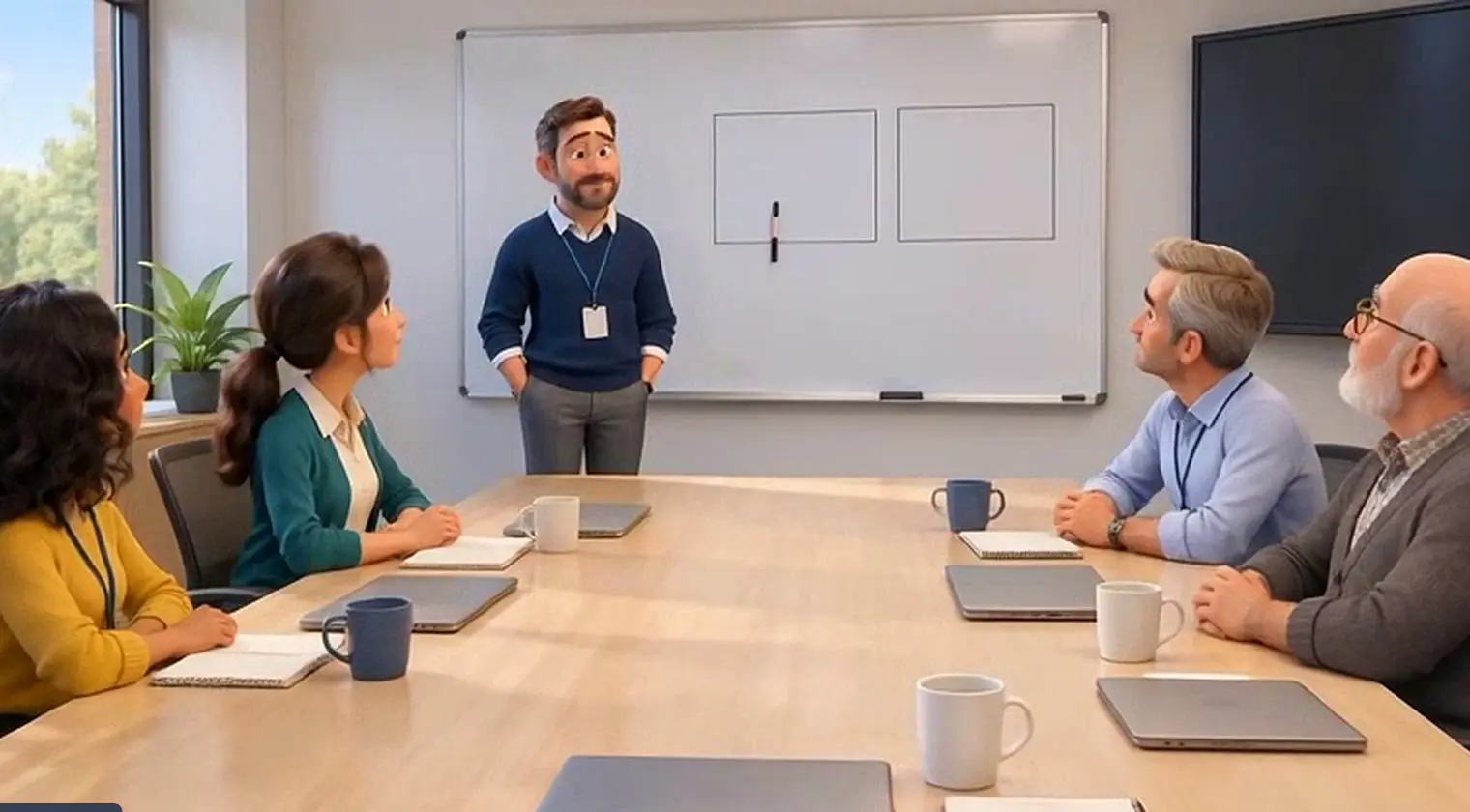
You have noticed something is not right, but what do you actually say? Here is a practical guide on how to talk to a student who is struggling, and what to do next.
By Jacques Tredoux, founder of Northbeam Leadership · 20 October 2026 · 4 min read
Most teachers know the moment. A student who is usually chatty has gone quiet. Homework has stopped arriving. There is a flatness that was not there a month ago. You have noticed, which matters a great deal. But then comes the harder question: how to talk to a student who is struggling without making things worse?
Many of us hesitate here. We worry about saying the wrong thing, prying, or opening something we do not feel equipped to handle. Those worries are understandable. They are also a reason to have a simple plan, not a reason to say nothing.
Choose the moment and keep it low-key
A serious conversation in front of the class rarely goes well. Look for a quieter moment instead: as the room empties, during a walk to another lesson, or while the student helps you tidy up. Side by side often feels easier for young people than face to face across a desk.
Keep the opening light and specific. Something like, "I have noticed you seem a bit quieter than usual this week. How are things?" You are naming what you have seen, not diagnosing anything, and you are leaving the door open rather than pushing it.
How to talk to a student who is struggling: listen more than you speak
Allow the silence. Students often need a few seconds before they decide whether to say more. If you fill the gap too quickly, the moment can pass.
Resist the urge to fix. When someone we care about is upset, we want to offer solutions. In a first conversation, it usually helps more to say, "That sounds really hard. Thank you for telling me."
Ask open questions. "What has been the hardest part?" or "What would help right now?" invite the student to lead, while "Are you okay?" usually gets a quick "Fine."
Accept a closed door gracefully. If the student does not want to talk, that is fine. Let them know you are around and that the offer stands. Sometimes the conversation that matters happens a week later, precisely because you did not push.
Know your limits, and your school's procedures
This is the part I would underline for every teacher. You are not a counsellor, and you do not need to be. Your role is to notice, listen and make sure the right people know.
Never promise to keep a secret. If a student tells you something that suggests they or someone else may be at risk, you will need to pass it on. It is kinder to explain that gently at the start than to break a promise later. Follow your school's safeguarding procedures, record what was said in the student's own words, and speak to your designated safeguarding lead the same day.
If a young person may need specialist help for their mental health, the most caring thing you can do is help them reach it, whether that is the school counsellor, their family or a health professional.
Follow up, even briefly
A conversation that is never mentioned again can leave a student feeling that sharing made no difference. A short check-in a few days later, "I was thinking about what you said. How has this week been?", tells them they were heard and that they still matter to someone.
Over more than twenty years in education, I have seen how much these small, ordinary conversations can mean. They cost very little, but they need adults who feel confident enough to start them.
So here is a question to sit with. Is there a student you have been meaning to check in with? What would stop you having that conversation tomorrow?
Wondering how to delegate as a head of department? Here is a practical way to share responsibility that develops your team, protects your time and avoids simply passing on the jobs you dislike.
Looking for school culture survey questions? Here is how to choose questions that tell you something useful, and how to act on the answers so staff trust the next survey.
Wondering how to use AI for lesson planning? Here is a practical approach that saves time while keeping your expertise, your students and your school policy at the centre.
A practical checklist for new heads of department, year leaders and team leaders: three phases to work through, from listening and learning in your first 30 days to leading your first improvement by day 90.
Download it straight away. We will also send you a quick email to confirm your address. Once you confirm, you get a copy of the checklist and four short follow-up tips over the next ten days. You can unsubscribe at any time.
We use cookies from Google Analytics, Google Ads, Microsoft Clarity and Metricool to see how visitors use this site and to measure our advertising. You can accept or decline. Read our cookie policyCookies: Google Analytics, Google Ads, Microsoft Clarity and Metricool. Cookie policy