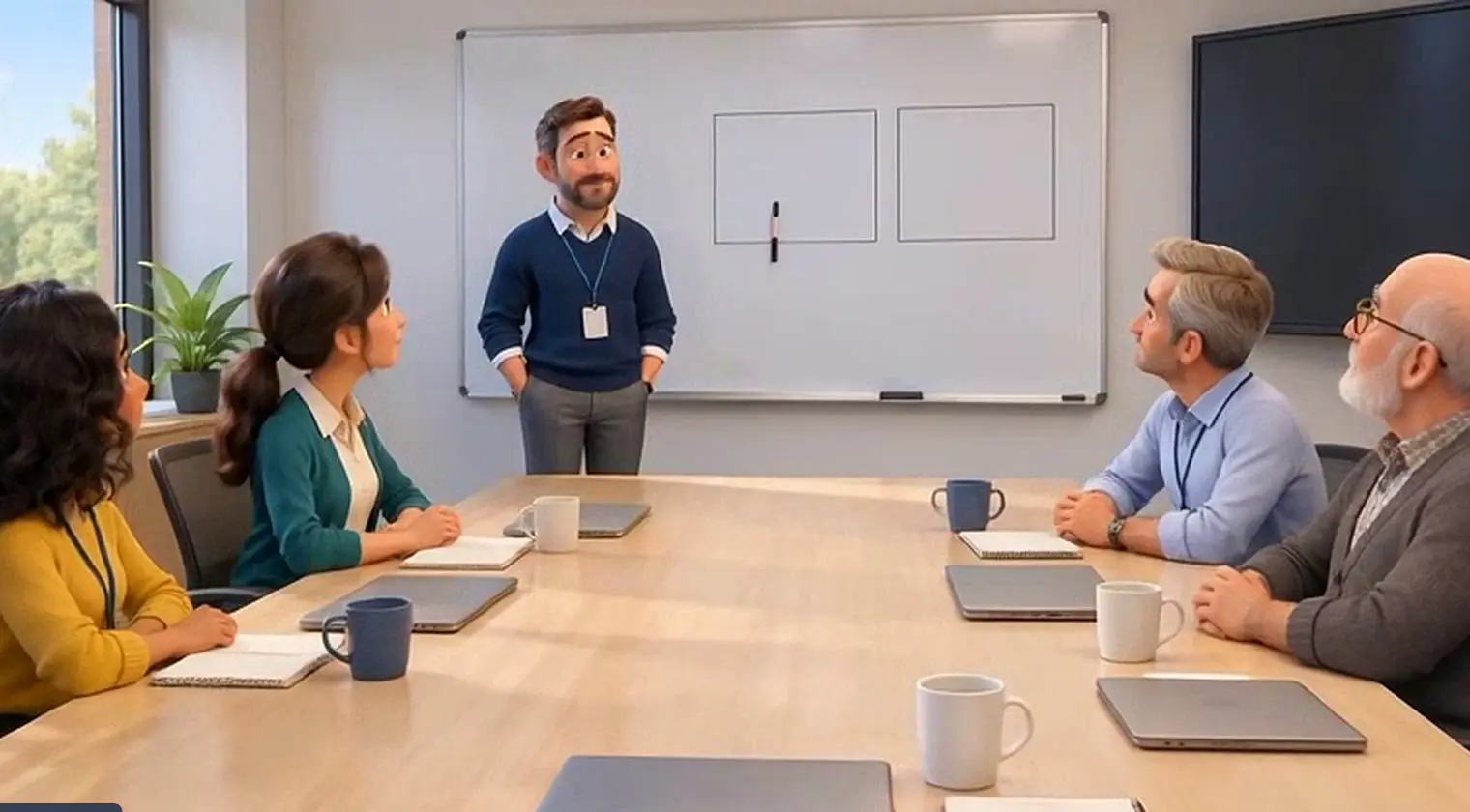
How to run a department meeting people actually value
Wondering how to run a department meeting that is worth everyone's time? Here is a practical approach for new and experienced heads of department.
By Jacques Tredoux, founder of Northbeam Leadership · 15 October 2026 · 4 min read
If you are a new head of department, one of the first things you will be asked to do is run a meeting. Searching for how to run a department meeting usually turns up lists of rules about agendas and timekeeping. They help, but they miss the bigger question. What is this hour actually for?
Most teachers have sat through department meetings that could have been an email. A long list of notices, a few deadlines, a rushed discussion at the end when everyone is tired. People leave knowing a little more and caring a little less. You do not have to run meetings like that.
Decide what the meeting is for
Department time is one of the scarcest resources in a school. It may be the only time your team is together in the same room each week or fortnight. So protect it for the things only a group can do: talking about teaching, looking at students' work together, solving shared problems and making decisions.
Information can almost always travel another way. Put the notices in a short written bulletin before the meeting and ask people to read it. If something needs discussion, it earns a place on the agenda. If it does not, it stays in the bulletin.
How to run a department meeting that people value
Share a short agenda in advance. Two or three items is plenty. Next to each one, write what you want by the end: a decision, ideas, or agreement on next steps. People prepare better when they know what is being asked of them.
Start with teaching. Put the most important item first, while people still have energy. Ten minutes looking at a set of books or sharing one strategy that worked this week says more about your priorities than anything you announce.
Give everyone a voice. Some colleagues will speak first and most. Others will have the better idea but wait to be asked. Use a quick round, pairs or a moment of silent thinking before discussion, so the meeting is not simply led by the most confident person in the room.
End with clear actions. Before anyone leaves, say out loud who will do what, and by when. Write it down and send it round the same day. Then start the next meeting by checking those actions. That small habit builds trust quickly, because people see that what is agreed actually happens.
Finish on time. Teachers have marking, planning and lives. Ending when you said you would is a simple way to show respect, and people will give you more of their attention when they know you will not keep them late.
Your meetings shape your team
Over more than twenty years in education, I have come to believe that you can learn a lot about a department from ten minutes of its meetings. Is there laughter? Do people disagree openly and respectfully? Does the conversation keep coming back to students and learning?
As a middle leader, you set that tone. Not through one big speech, but through the ordinary weekly choices about what goes on the agenda and how people are treated in the room.
If you are new to the role, my free middle leader checklist is a good place to start thinking about these routines. And here is a question to take into your next meeting: if your team could only remember one thing from it, what would you want that to be?
Wondering how to delegate as a head of department? Here is a practical way to share responsibility that develops your team, protects your time and avoids simply passing on the jobs you dislike.
Looking for school culture survey questions? Here is how to choose questions that tell you something useful, and how to act on the answers so staff trust the next survey.
Wondering how to use AI for lesson planning? Here is a practical approach that saves time while keeping your expertise, your students and your school policy at the centre.
A practical checklist for new heads of department, year leaders and team leaders: three phases to work through, from listening and learning in your first 30 days to leading your first improvement by day 90.
Download it straight away. We will also send you a quick email to confirm your address. Once you confirm, you get a copy of the checklist and four short follow-up tips over the next ten days. You can unsubscribe at any time.
We use cookies from Google Analytics, Google Ads, Microsoft Clarity and Metricool to see how visitors use this site and to measure our advertising. You can accept or decline. Read our cookie policyCookies: Google Analytics, Google Ads, Microsoft Clarity and Metricool. Cookie policy